

The right to health, both physical and mental, constitutes the central core of human dignity and is universally recognized internationally. However, the COVID-19 pandemic has highlighted how linguistic and socio-cultural barriers can become insurmountable obstacles to a full understanding of the local healthcare system. Regrettably, these barriers hinder effective and timely access to medical care, particularly for minorities, including first-time migrants.
To address these challenges, the “HealthMi: Health Care Professional Guidance for Migrants” project aims to enhance access to local healthcare services for migrants. The activities planned for the two-year project will identify innovative methods to reduce inequalities and redirect local healthcare systems toward greater consideration of the psychosocial well-being of migrants.
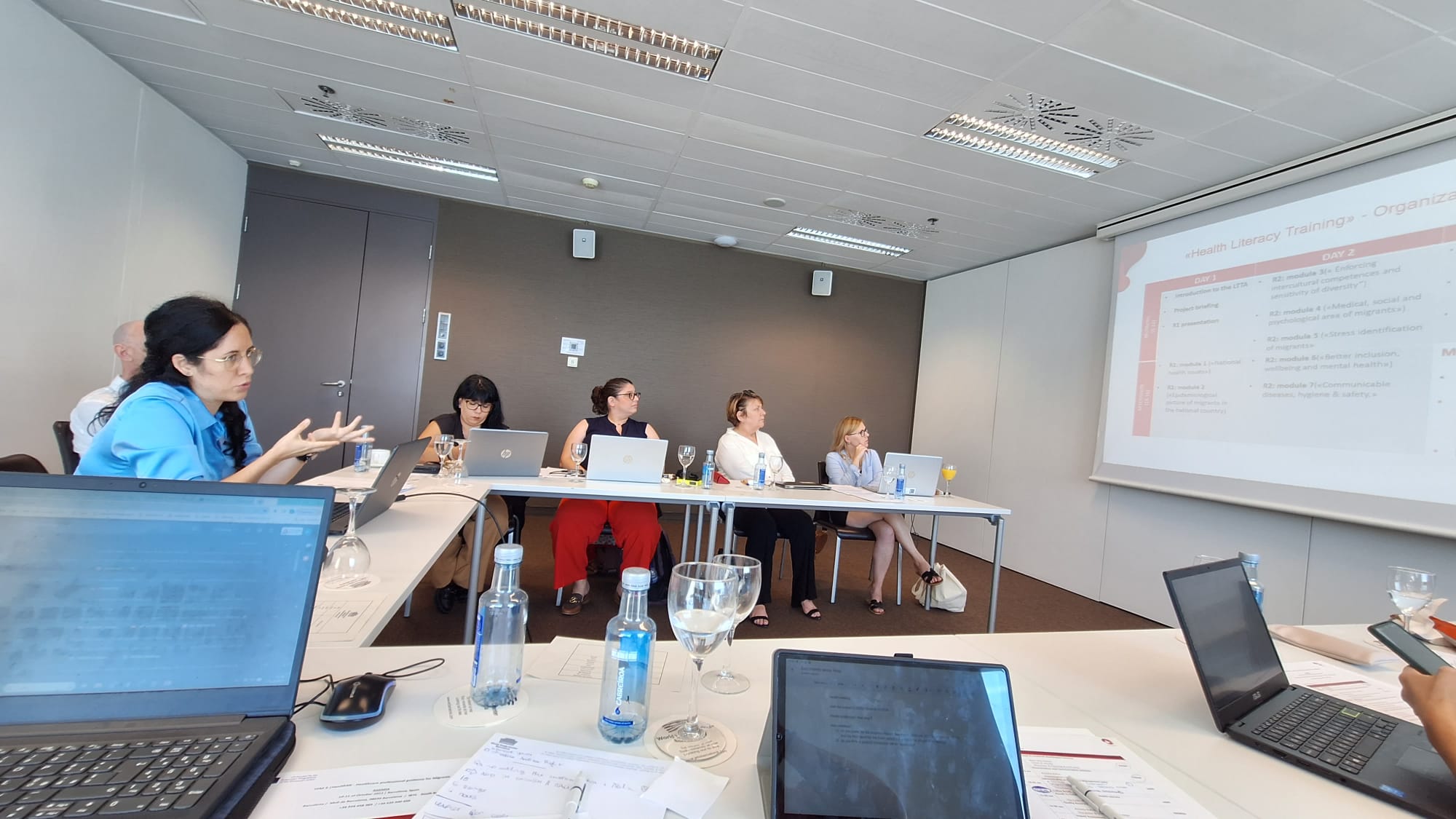
The cooperation among project partners was formalized during the third transnational project meeting held on October 9th and 10th, 2023, in Barcelona, Spain, hosted by Ibonis. During the two working days, the partnership discussed the finalization of the “Code of Conduct for Health Literacy.”

The HealthMI code of conduct represents a comprehensive set of principles and guidelines that promote respectful treatment and quality care for migrants, refugees, and asylum seekers. Organized into seven articles, the code emphasizes the importance of understanding diverse cultures, ensuring equal access to services, protecting confidentiality, and facilitating effective communication. These principles aim to ensure fair treatment and the well-being of migrants, encouraging inclusivity and cultural competence. Additionally, the code promotes the use of respectful language and offers specific guidance for different migrant groups. It underscores the importance of protecting minors, providing trauma-informed care, and fostering collaboration among various entities to enhance migrant support. Transparency, research, and ongoing education are also key aspects of the code, which encourages regular evaluation and continuous improvement of practices. Overall, the HealthMI code of conduct is committed to ensuring that migrants receive dignified treatment based on respect and understanding, thereby contributing to their well-being and integration.
The next stages of the project include the following activities:
- Double training Program on Healthcare accessibility: organization of two twin training programs. On the one hand, healthcare professionals will be trained to efficiently addressing quality information and support to migrants, concerning their psycho-social wellbeing. On the other hand, the hybrid curriculum for migrants will provide basic knowledge and materials for an easy access to local healthcare services.
- Multilingual digital platform: co-creation of online information provider of both training content and basic knowledge materials linked to healthcare. This gateway will be structured as interactive tool for the networking of both targets

Co-funded by the European Union. Views and opinions expressed are however those of the author(s) only and do not necessarily reflect those of the European Union. The European Union cannot be held responsible for them.