

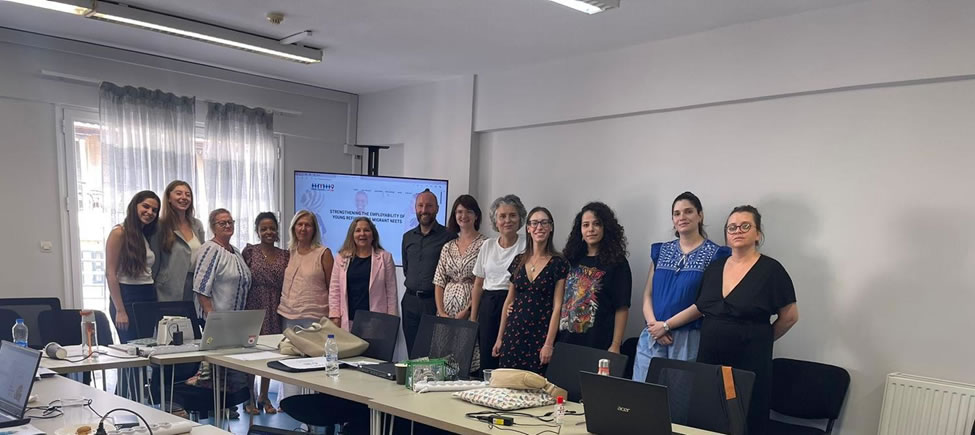
Newly arrived refugee or migrant youth across Europe face many challenges in their efforts to find quality employment such as low language and literacy skills, underdeveloped job-related skills, lack of support and networks, and insufficient knowledge of the regulatory framework and cultural codes. These individual and social barriers explain their high representation in the NEETs group across Europe. The Erasmus project launched in November 2022 addresses precisely this issue.
The general objective of Newcomers@Work is the social inclusion and empowerment of newly arrived young NEETs (aged 18-25) with a refugee or migrant background by improving their employability skills.
Newcomers@Work will carry out activities that will develop the employability of these young people through individualized, innovative learning and supporting activities, and the active cross-sectoral cooperation of a large variety of actors, including public authorities, civil society organizations, and employers.
Activities are planned, developed, and implemented in six different local settings across Europe (Poland, Portugal, Italy, Luxembourg, Romania, and Greece), to cover the needs of the local populations of young professionals and migrants/refugees. The project will therefore address the heterogeneity of the specific group and provide innovative tools that can be adapted to the different realities and needs.
The Newcomers@Work project will develop two guides (The Newcomers@Work Curriculum and Guide and The Newcomers@Work Implementation Guide), a toolbox (Newcomers@Work Digital Toolbox), as well as a series of training activities and dissemination events. All the materials will be available in English, Greek, Italian, Portuguese, Polish, Romanian, and French.
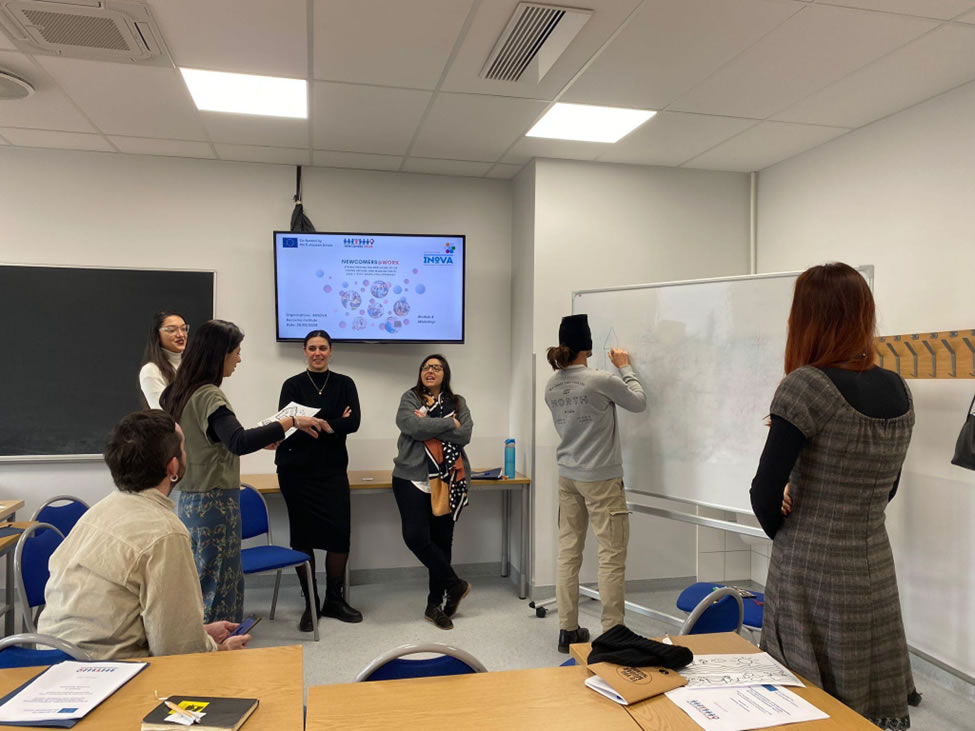
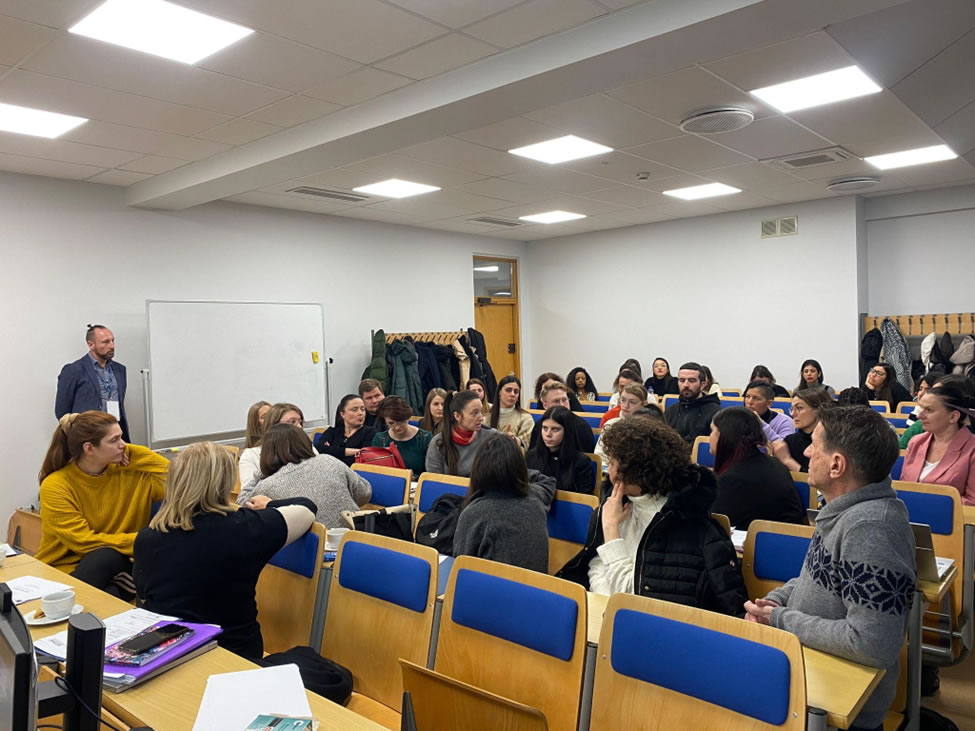
So far, the project team finalized the Newcomers@Work Curriculum and Guide. The Curriculum comprises the following modules: The Needs of the NEETs, Language and Digital Skills for Employability, Soft/Life Skills for Employability, and Creating Synergies. The Guide supplements the Curriculum and was created as a document to further support youth professionals in their endeavor to support refugee/migrant NEET youth integration into the labor market of the host society. The Curriculum also contains an extensive set of activities, exercises, tools, and materials to be used directly with young people during non-formal activities.
A three-day training event was held in February 2024 in Gdansk, Poland, where partners piloted the curriculum and guide. Five youth professionals per country (ten from Poland) participated and provided feedback. After analyzing the input collected regarding the training event and piloting, partners finalized and translated the Newcomers@Work Curriculum and Guide into their national languages. Cristina, Anastasiia, Natalia, Magda, and Stefania represented the Bucovina Institute at this training.
A two-day project management meeting was held in September 2024 in Athens, Greece. Partners from all six project countries discussed work packages, achievements, and next steps. It was a productive event that brought us closer to achieving the project goals. Kateryna Mahas and Maria Pavelescu represented the Bucovina Institute at this meeting.
This project has a duration of 36 months, a value of €400,000, and is co-founded by the European Union.
To learn more about the project, you can visit the website (https://newcomersatwork.eu/), the Facebook page (https://www.facebook.com/newcomersatworkproject.eu), and the LinkedIn page (https://www.linkedin.com/company/newcomersatwork).

Co-funded by the European Union. Views and opinions expressed are however those of the author(s) only and do not necessarily reflect those of the European Union. The European Union cannot be held responsible for them.