

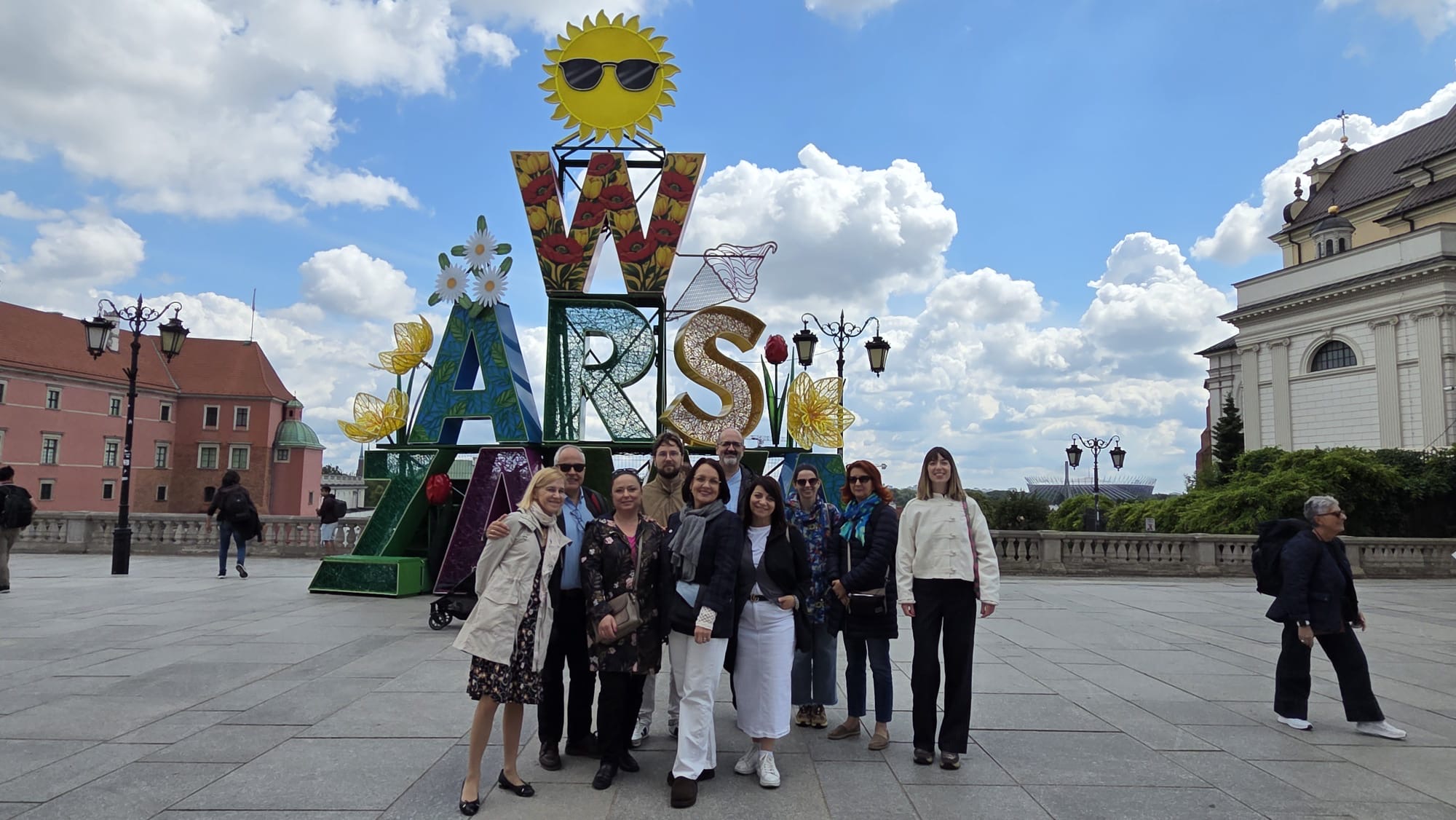
After two years of international cooperation, the Erasmus+ ReligiTour project has officially come to an end, leaving behind valuable resources, knowledge and new perspectives on the role of religious tourism in the preservation and promotion of cultural heritage.
ReligiTour was created to strengthen the competences of educators, students and tourism professionals by exploring religious tourism as a cultural, social and economic phenomenon. Through collaboration between universities, research institutions and organisations from different European countries, the project developed educational resources focused on the analysis and promotion of destinations linked to religious heritage.
Throughout the project, partners carried out research activities, collected good practices, interviewed experts, developed educational materials and organised opportunities for international exchange and discussion. Particular attention was given to identifying models and strategies for enhancing religious sites, pilgrimage routes, local traditions and lesser-known cultural heritage assets that hold significant value for local communities.
Among the project’s main achievements are educational resources, case studies, digital learning materials and an open-access online platform designed to support learning and facilitate the transfer of knowledge generated by the partnership.
For PRISM Impresa Sociale, participation in ReligiTour was also a valuable opportunity to rediscover more closely the richness of Sicily’s religious heritage. The project encouraged us to look with greater attention at places, stories and traditions that are often little known, yet deeply connected to the island’s identity. This heritage, shaped by the encounter of different cultures and religions, represents a still partly hidden resource to be better valued and narrated as part of Sicily’s unique historical, cultural and spiritual legacy.
Although the project has formally concluded, its results will continue to support future initiatives and collaborations aimed at promoting European cultural heritage and encouraging more sustainable, inclusive and community-oriented tourism models.
Further information and project results are available through the ReligiTour platform: https://www.religitour.eu/

Co-funded by the European Union. Views and opinions expressed are however those of the author(s) only and do not necessarily reflect those of the European Union. The European Union cannot be held responsible for them.