

Nowadays, it could be challenging to find a job, and it could be even more challenging to find our own talents or to create new career opportunities.
The project 4TALENTS aims at supporting disadvantaged young adults to meet the needs and requests of the employment market. This group may experience lack of motivation, training or formal qualification and it could be more difficult to find a place in the job market, that is becoming more and more demanding.
Life skills and talents can help them to find a job opportunity, or to create new career paths, tailored on their needs.
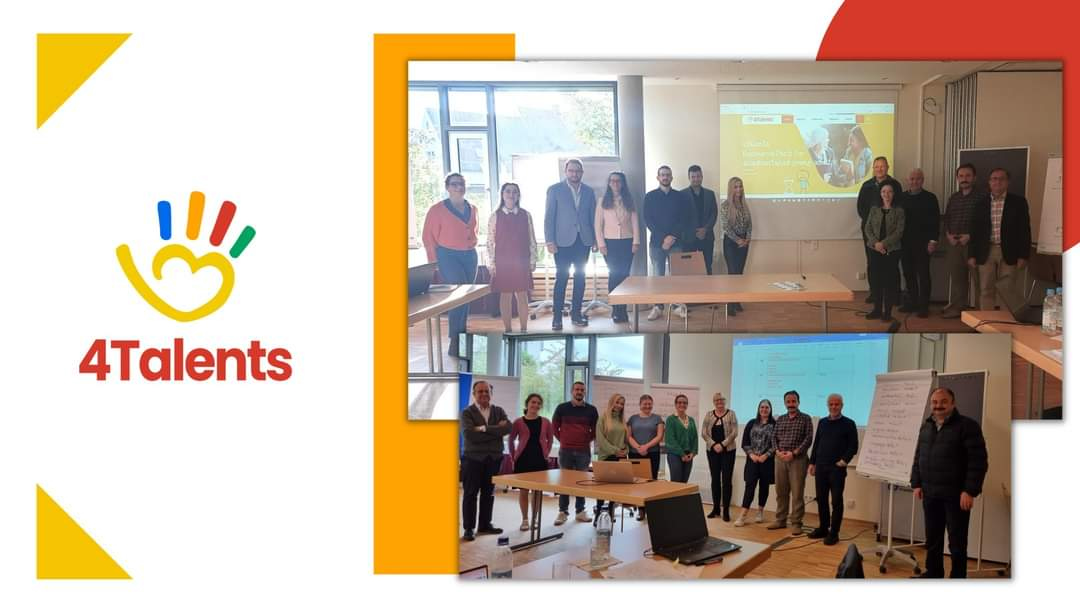
During the first face-to-face meeting in Freising (Germany), the partners worked hard to find out talents and skills that can be fostered within our target group.
To support the growth of these talents, developed through everyday life experiences, the project foreseen a training for trainers who work with disadvantaged young adults.
Partner countries will develop activities to assess talents in an innovative way (through games, puzzles, theatre), which will be tested in Ankara in November with youth workers and experts coming from Denmark, Italy, Turkey, Spain, Romania, Germany and Poland.
If you work with disadvantaged young adults and are interested in new training opportunities to know more about life skills and talents, write an email to: s.sucato@prismonline.eu .
Moreover, the meeting was an occasion to discuss what has been done until now and the next results to be achieved for the second year of the project, but also to understand what a “talent” is, which talents we could foster and how the identified talents could be affected by different cultural background.
To know more about the project and further steps, stay tuned on 4TALENTS Facebook, Instagram and website!

This project has been funded with support from the European Commission. This document reflects the views only of the authors, and the Commission cannot be held responsible for any use which may be made of the information contained therein.